Unlocking Your Potential: The Importance of Emotional Intelligence in Career Development
By Talent Navigator
Published Dec 19, 2024
5 min read
What is Emotional Intelligence?
Emotional Intelligence, often referred to as EI or EQ (Emotional Quotient), represents an individual's ability to recognize, understand, and manage emotions effectively. This emotional acumen encompasses not just how we perceive our own feelings, but also how we interpret and react to others' emotions.
The concept was popularized by psychologist Daniel Goleman, who identified five essential components of emotional intelligence:
- Self-Awareness
- Self-Regulation
- Motivation
- Empathy
- Social Skills
The Five Components of Emotional Intelligence
Understanding these components allows for a comprehensive analysis of one's emotional strengths and areas needing improvement.
1. Self-Awareness
Self-awareness involves recognizing personal emotions and their effects on thoughts and behaviors. Individuals high in self-awareness tend to be more in tune with their feelings and are better equipped to handle stress and decision-making.
2. Self-Regulation
Self-regulation refers to managing one’s emotions in healthy ways, demonstrating self-control, and exhibiting resilience. This skill enables individuals to maintain composure during challenging situations.
3. Motivation
This component represents an individual's drive to achieve goals for reasons beyond external rewards. It involves maintaining a positive attitude and resilience in the face of setbacks.
4. Empathy
Empathy is the capacity to comprehend and share the feelings of others. It enables individuals to connect on a deeper emotional level and is vital for effective communication and relationship building.
5. Social Skills
Social skills encompass the ability to build and maintain healthy relationships, communicate effectively, and influence others positively. Individuals with strong social skills can navigate social complexities, critical in many professional environments.
The Role of Emotional Intelligence in Career Development
Emotional intelligence plays a pivotal role in various aspects of career development. Here’s how:
- Enhanced Leadership: Leaders with high EQ are adept at managing their own emotions and can inspire others through effective communication and empathy.
- Improved Decision-Making: Emotional intelligence allows for better analysis of situations and informed decision-making by understanding emotional responses.
- Stronger Interpersonal Relationships: Understanding emotional triggers helps in fostering better communication and reducing conflicts at work.
- Career Planning: Individuals with higher emotional intelligence often encounter better job performance and career advancement opportunities.
Assessing Emotional Intelligence through Testing
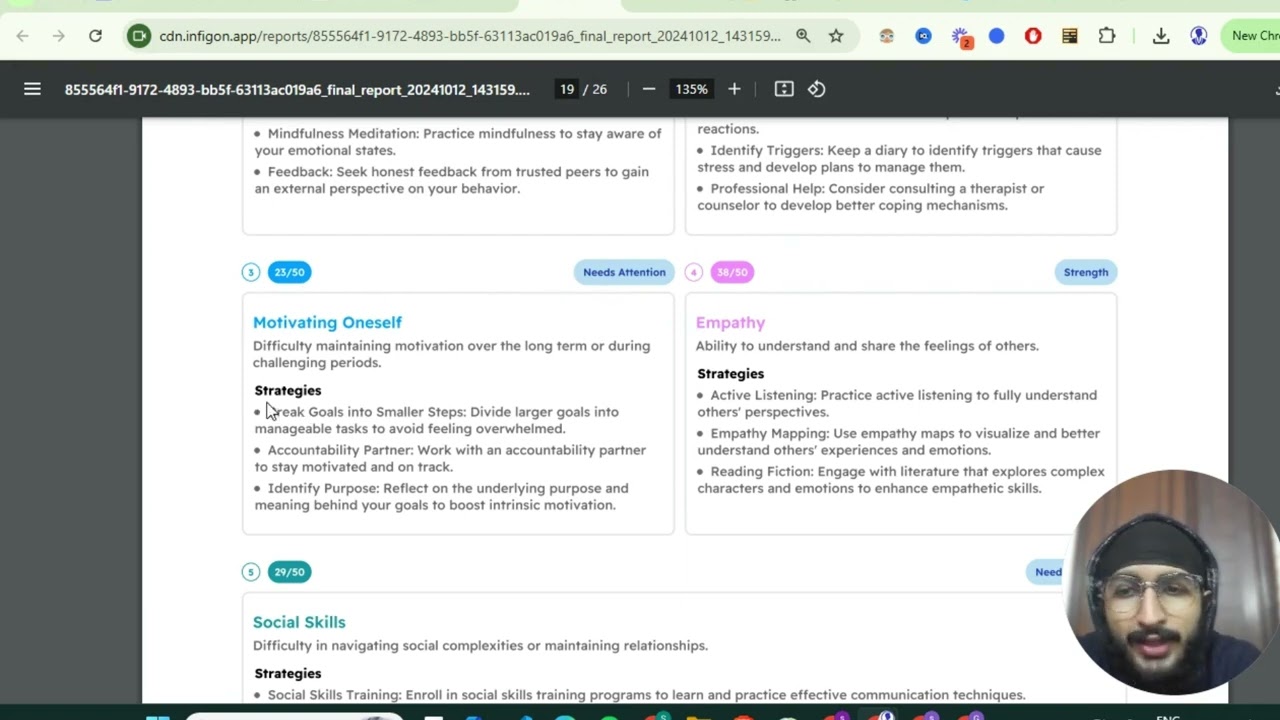
For those interested in evaluating their emotional quotient, standardized EQ tests can provide valuable insights. These assessments typically result in scores across the five key components of emotional intelligence. For example, let’s examine a hypothetical individual’s EQ scores:
- Self-Awareness: 40
- Managing Emotions: 29
- Motivating Oneself: 23
- Empathy: 38
- Social Skills: 29
Insights from the Scores
Based on these scores, we can identify strengths and areas for improvement:
- Strengths:
- Self-Awareness (40): This indicates a strong ability to understand emotions and their impact.
- Empathy (38): A solid score showing good empathetic understanding of others.
- Areas Needing Attention:
- Managing Emotions (29): Requires focus. Strategies might include breathing exercises during stressful moments and identifying emotional triggers.
- Motivating Oneself (23): A low score suggests challenges in maintaining motivation. Breaking goals into smaller steps and working with accountability partners may be beneficial.
- Social Skills (29): Social skills training and seeking constructive feedback can assist in developing this area.
Strategies for Improving Emotional Intelligence
To enhance emotional intelligence, individuals can engage in several effective strategies tailored to each component:
- Self-Awareness:
- Engage in journaling to reflect on thoughts and feelings.
- Practice mindfulness meditation to enhance awareness of emotional states.
- Seek feedback from trusted peers to gain external perspectives.
- Managing Emotions:
- Implement a pause-and-breathe technique in high-stress situations.
- Keep a diary to track emotional triggers and coping strategies.
- Consider consulting a therapist for personalized coping mechanisms.
- Motivating Oneself:
- Break larger goals into achievable tasks to prevent overwhelm.
- Identify personal motivations that reinforce meaningful pursuits.
- Partner with someone who can provide accountability and encouragement.
- Empathy:
- Practice active listening to fully grasp others’ perspectives.
- Use empathy mapping for better understanding of others’ experiences.
- Read literature that explores complex characters to enhance empathetic skills.
- Social Skills:
- Enroll in social skills training programs.
- Regularly solicit feedback on social interactions for continual improvement.
- Work with a mentor to refine and develop communication techniques.
Conclusion
Emotional intelligence is not just an abstract concept; it is a vital skill set that can significantly impact both personal and professional lives. By understanding and improving your emotional intelligence through consistent practice and targeted strategies, you can unlock your full career potential, enhance workplace relationships, and become an effective leader.
Investing in your emotional intelligence can lead to many opportunities—don’t overlook its transformative power!
If you're ready to explore your emotional intelligence further and discover practical ways to enhance your skills, consider taking an EI test and implementing the recommended strategies today!


Comments
Post a Comment