Diverse Career Paths for 2025: Exploring Opportunities in STEM and Beyond
By Talent Navigator
Published Jan 3, 2025
4 min read
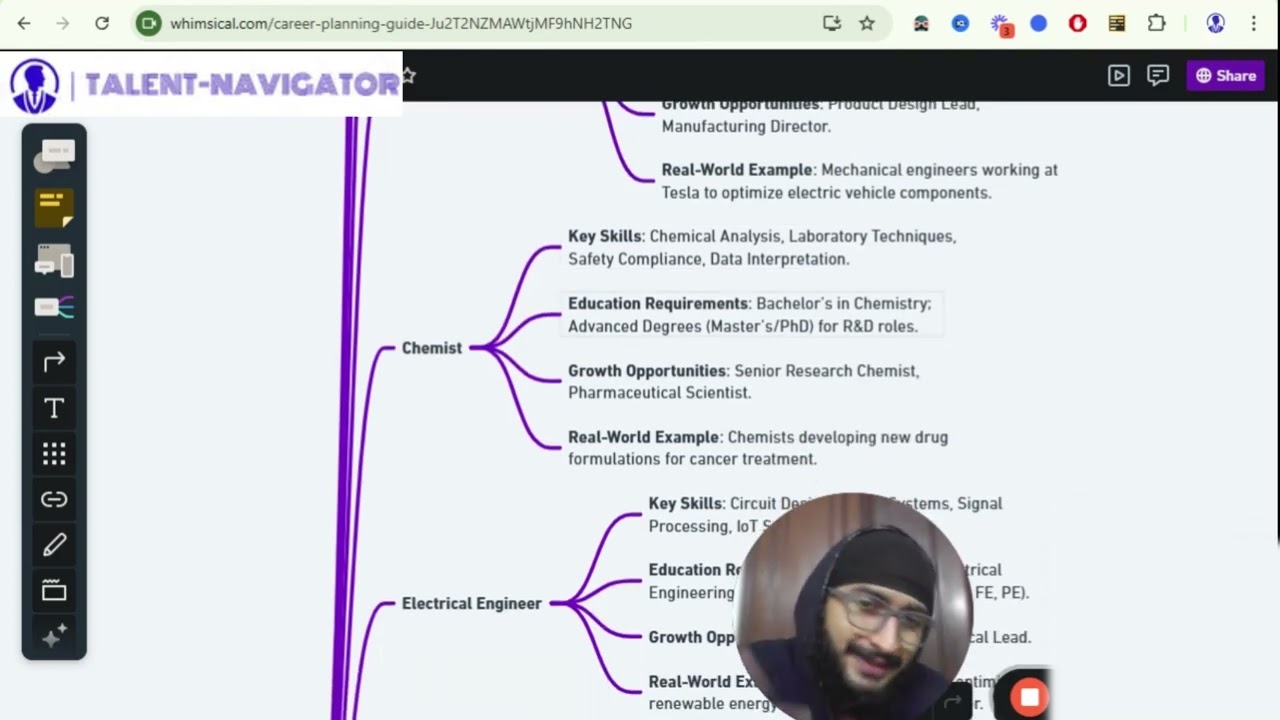
The landscape of career opportunities is constantly evolving, and 2025 promises to bring new paths and exciting prospects in various fields. If you’re a student contemplating your future, a career switcher looking for something fresh, or just someone curious about what's out there, you're in the right place. In this guide, we'll explore numerous career options available in 2025, including both conventional and non-conventional career paths, with a special focus on STEM professions that are gaining traction.
Exploring Diverse Career Options for 2025 🚀
Understanding the Landscape of Career Options
The career choices we make today will shape not only our professional lives but also our contributions to society. As technology advances and industries innovate, it's crucial to identify potential careers that align with your skills and passions. This guide covers:
- Conventional Careers: Predominantly focused on STEM fields (Science, Technology, Engineering, Mathematics), healthcare, and finance.
- Non-Conventional Careers: Creative professions, emerging industries, and innovative roles that may not have been commonly recognized until now.
Conventional Careers in STEM
1. Data Scientist
Data scientists are often dubbed the detectives of the digital age due to their ability to analyze vast amounts of data.
- Key Skills: Data analysis, machine learning, programming languages (Python, R, SQL), communication.
- Education: Bachelor’s degree in Mathematics or Computer Science, with a Master’s in Data Science preferred.
- Growth Opportunities: Positions such as AI Specialist, Chief Data Officer, or Data Science Manager.
- Real-World Example: A data scientist at Netflix personalizes viewing recommendations to enhance user experience.
2. Software Engineer
With nearly every industry relying on software solutions, software engineers remain in high demand.
- Key Skills: Programming (Java, Python, C++), version control, cloud computing.
- Education: Bachelor's degree in Software Engineering or Computer Science.
- Growth Opportunities: Senior Developer, Tech Lead, or CTO.
- Real-World Example: A software engineer at Google develops scalable applications, impacting millions of users daily.
3. Civil Engineer
As the backbone of infrastructure development, civil engineers play a pivotal role in society.
- Key Skills: Structural design, project management, knowledge of environmental regulations.
- Education: Bachelor's in Civil Engineering, Professional Engineer (PE) license.
- Growth Opportunities: Senior Project Manager, Urban Development Consultant.
- Real-World Example: Designing earthquake-resistant buildings in high-risk areas like California.
4. Pharmacist
Pharmacists are essential in healthcare, providing crucial medication guidance to patients.
- Key Skills: Patient counseling, medicine dispensing, inventory management.
- Education: Bachelor in Pharmacy (BPharm) or doctoral degree (PharmD).
- Growth Opportunities: Clinical Pharmacist, Research Pharmacist, Pharmacy Manager.
- Real-World Example: Advising on drug interactions and immunization services.
Emerging Non-Conventional Careers
1. Augmented Reality Developer
With the rise of AR technology, developers skilled in this area are becoming increasingly valuable.
- Key Skills: 3D modeling, AR/VR programming.
- Education: Degree in game design or related fields; relevant certifications.
- Growth Opportunities: AR/VR Designer roles are expanding rapidly.
2. Climate Data Analyst
As climate concerns become more pressing, data analysts are critical in understanding environmental trends.
- Key Skills: Environmental modeling, Geographic Information Systems (GIS).
- Education: Degree in Environmental Science; GIS certifications.
- Growth Opportunities: Positions such as Sustainability Consultant.
3. Renewable Energy Engineer
In the wake of climate change discussions, renewable energy engineers are paving the way for sustainable technologies.
- Key Skills: Technologies in renewable energy, system design.
- Education: Bachelor's in Renewable Energy; certifications in solar/wind energy.
- Growth Opportunities: Energy Consultant roles.
Conclusion: The Future Awaits
As we look forward to 2025, the array of career options is vast, ranging from established paths in STEM fields to non-traditional roles that cater to innovative sectors. Whether it's pursuing a role as an aerospace engineer working on interplanetary exploration or becoming a biotechnologist to aid agricultural advancements, the opportunities are abundant.
It's vital to understand your interests and strengths when navigating this landscape, as the career you choose will significantly contribute to both personal satisfaction and societal growth. Feel free to explore these options and consider how they align with your professional goals.
Engage with us further by sharing your thoughts or suggestions to improve future discussions on career opportunities. Your input is valuable as we uncover more exciting careers together!


Comments
Post a Comment