Exploring the Total Finger Ridge Count (TFRC) and Its Significance in Understanding Brain Function
By Talent Navigator
Published Jan 5, 2025
5 min read
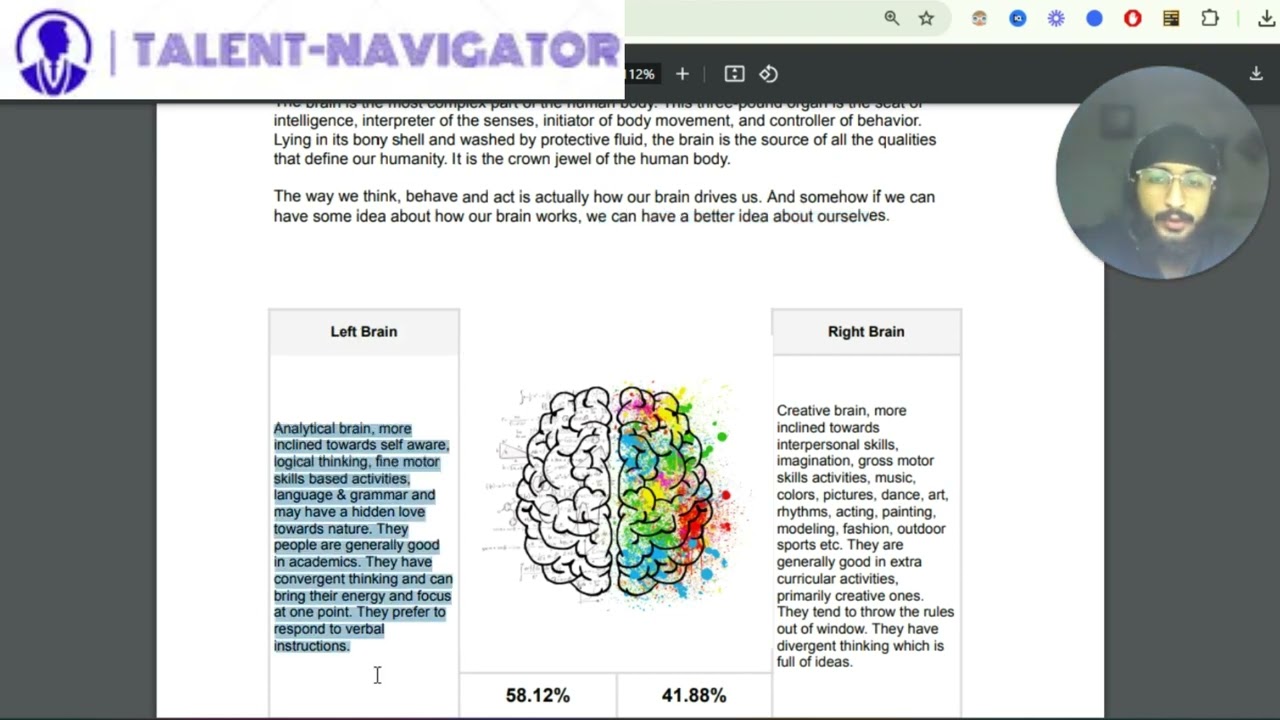
Understanding the functions of the brain is crucial for psychology enthusiasts, especially when it comes to concepts like the Total Finger Ridge Count (TFRC). This measure provides insights into a person’s inborn learning capacity and neuron connectivity in the brain. In this article, we will review what TFRC is, how it relates to neural function, and the implications of left and right brain dominance in learning abilities.
What is Total Finger Ridge Count (TFRC)?
The Total Finger Ridge Count (TFRC) represents the number of ridges, or lines, on a person's fingers. It's believed that this count can provide information about a person’s innate learning abilities, often associated with the functional capacity of the neocortex. Here's how it works:
- Neuronal Capacity: At birth, humans have around 100 billion neurons in their cerebral cortex. These neurons form myriad connections — roughly 5,000 to 10,000 junctions per cell — and continually rewire throughout life as we learn and experience new things.
- Measurement of Learning Capacity: TFRC is assessed through tests and categorizes an individual’s learning potential. Scores are interpreted in ranges, from low to outstanding, reflecting the individual’s neuronal connectivity and potential for learning.
https://www.youtube.com/watch?v=AKtiMaDPeFo&ab_channel=TalentNavigator
TFRC Score Categories
Understanding the TFRC score ranges can help individuals identify their personal learning style and potential:
- Below 60: Low potential, often requiring unique learning styles.
- 61-70: Average learning capacity; methods should be introduced gradually.
- 71-90: Above average; expectations can be higher, and learning strategies can be adjusted accordingly.
- 91-140: Good learning capacity; individuals are often inspired learners.
- 141-180: Very good; individuals can lead others and possess strong learning abilities.
- 181-200: Excellent potential; such individuals should actively explore and harness their capabilities.
- Above 200: Outstanding capacity; individuals have a significant potential for high-level success.
It’s essential to remember that TFRC is not a direct measure of IQ; rather, it’s an indication of a person’s inherent learning capabilities. For example, the famous physicist Albert Einstein had a smaller brain size than average, yet exhibited 20 to 25% more neuron connections, demonstrating how sheer volume isn't the sole determinant of intellectual capacity.
Understanding Brain Dominance
The brain, weighing approximately three pounds, is the seat of intelligence and plays a crucial role in how we think, behave, and make decisions. It consists of two primary hemispheres: the left brain and the right brain, each responsible for different functions.
Left Brain Functions
Individuals with a dominant left brain are often characterized by the following qualities:
- Analytical Thinking: These individuals excel in logical reasoning, problem-solving, and other academic pursuits.
- Detail-Oriented: They tend to break down problems into manageable parts and prefer structured approaches to tasks.
- Language Skills: Strong abilities in language, grammar, and verbal instructions are hallmark traits.
- Fine Motor Skills: Activities requiring precise movements, like writing and practical tasks, fall within their expertise.
Right Brain Functions
On the other hand, right-brain dominant individuals thrive in:
- Creativity and Imagination: They often excel in arts, music, and other forms of creative expression.
- Holistic Thinking: Instead of dissecting problems, they view challenges from a broader perspective, allowing for a more intuitive approach.
- Emotional Depth: These individuals may connect emotionally to their tasks, often leading to engaging and innovative results.
- Interpersonal Skills: They possess strong abilities in understanding and responding to the emotions of others, making them effective collaborators in team settings.
Brain Activity Balance
In assessments, you might find yourself somewhere on the spectrum of left to right brain dominance. For instance, a breakdown of 60% left brain to 40% right brain suggests a stronger analytical inclination than creative. Knowing where you fall on this spectrum can significantly influence how you approach learning and problem-solving.
Implications for Learning Styles
Considering both TFRC results and brain dominance can greatly enhance how individuals approach their education and professional development:
- Adapting Learning Strategies: Those with a lower TFRC may benefit from structured learning, while higher scores might indicate a need for more exploratory and creative approaches.
- Tailoring Instruction: Understanding a person’s dominant brain function can aid educators and trainers in developing effective teaching strategies that resonate with the learner’s strengths.
- Personal Development: Recognizing your own learning style and neural capacity can facilitate personal growth and improve efficiency in acquiring new skills.
Conclusion
The Total Finger Ridge Count (TFRC) serves as a fascinating indicator of an individual's innate learning potential, while understanding brain dominance can guide learning strategies. By combining these insights, individuals can unlock greater success and fulfillment in their educational pursuits and careers. Recognizing that different strengths and capacities exist allows us to appreciate the richness of human intelligence.
Maximize your hidden potential and embrace your learning journey by discovering how TFRC and brain dominance apply to you! Whether you strive to nurture your analytical side or unleash creative talents, understanding these elements is the first step toward personal growth and achievement.
Explore your learning potential today and see how you can integrate these insights into your daily life!


Comments
Post a Comment