The Impact of Parents' Personalities on Child Development
By Talent Navigator
Published Jan 3, 2025
4 min read
Understanding how the personalities of parents shape their children is crucial for both psychological studies and parenting practices. Parents have a profound influence on their child’s emotional security, social skills, and cognitive development, all of which have consequences on their future relationships and self-worth. In this article, we'll delve into the significant roles of both fathers and mothers, exploring how their unique personalities can create various dynamics in the parent-child relationship.
The Father’s Role in Child Development
Fathers are often depicted as an essential figure in a child’s life. The saying, "A father is a son’s first hero and a daughter’s first love" is quite telling. When fathers are actively involved in their children’s lives, they help shape their emotional and social foundations. Here are some key roles that fathers play:
- Providing Security: Fathers often provide a sense of safety and assurance which is crucial for a child's development.
- Encouraging Self-Esteem: A father’s involvement can significantly enhance a child's self-esteem and confidence through positive reinforcement.
- Role Models: Fathers frequently serve as role models, teaching life lessons about discipline, respect, and responsibility.
Research shows that children with supportive fathers often exhibit improved academic performance and better social skills. A positive father-child relationship fosters a nurturing home environment resulting in healthier future relationships.
The Complex Father-Child Dynamics
However, personality clashes can complicate the father-child relationship. For instance, if both father and child belong to the same personality type, such as the Eagle personality (known for assertiveness and goal orientation), they may face conflicts but can also thrive through mutual motivation and inspiration. The dynamic can vary based on their willingness to adapt and cooperate, ensuring a constructive relationship.
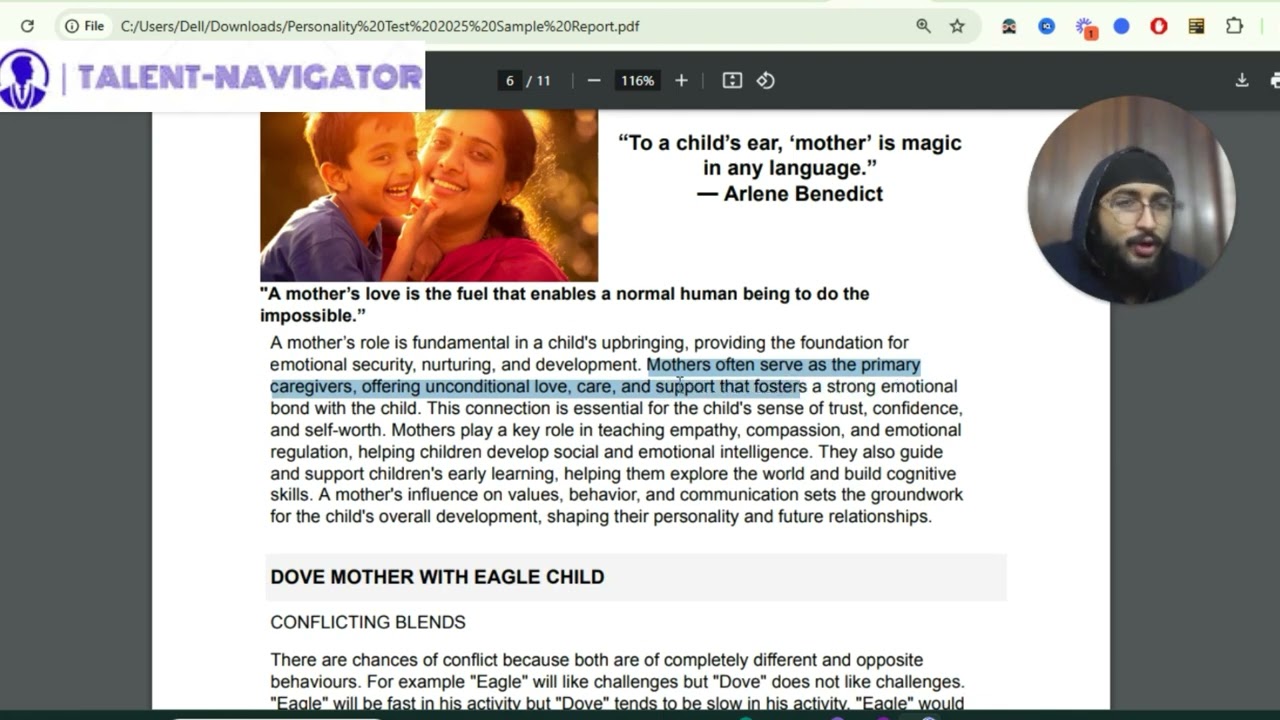
The Mother's Influence on Child Development
A mother’s impact is equally significant, characterized by unconditional love and nurturing. As stated by author Arene Benedict, "A mother's love is the fuel that enables a normal human being to do the impossible." The maternal role in child development includes:
- Emotional Security: Mothers provide a nurturing environment that fosters emotional health and stability.
- Teaching Empathy and Compassion: Through daily interactions, mothers teach children about emotions and understanding others, fostering social and emotional intelligence.
- Early Learning Guidance: They play a crucial role in cognitive development, guiding exploration and learning about the world.
Navigating Mother-Child Personality Traits
The relationship between a mother and a child can also reflect personality dynamics. For example, if a mother has a Dove personality (value-oriented and nurturing) while the child is an Eagle (driven by challenges), there may be conflicts due to their opposing traits. The engaging and assertive nature of the Eagle may clash with the Dove’s intent to maintain harmony. Finding a balance is vital; collaboration can allow the mother to encourage her child to be more assertive and help the Eagle learn greater empathy.
Cognitive and Emotional Patterns
Personality types also dictate how parents think and approach situations. Understanding these patterns can help enhance communication and relationships.
Thinking Patterns
- Object-Driven: This personality base focuses on facts and goals, with a rational approach to problem-solving.
- Concept-Driven: These individuals thrive on creativity and visualization, often motivated by emotions and high-risk ventures.
Understanding these thinking patterns aids in tailoring parenting styles to suit children's needs and applying appropriate guidance.
Leadership Styles in Parenting
Parenting can also be viewed through leadership styles, which can be generally categorized into:
- Task-Oriented: These parents focus on goals, often leading with strictness and sensitivity to task completion.
- Relationship-Oriented: Such parents prioritize emotions and interpersonal relationships, promoting two-way communication and empathy.
Each leadership style has its benefits and drawbacks; integrating these styles can help create a well-rounded parenting approach that encourages both achievement and emotional connection.
Conclusion
The influence of parental personalities on children's development cannot be overstated. Parents play pivotal roles in shaping not only the immediate environment but also the future personality traits and relational patterns of their children. Educating ourselves about these dynamics and applying them in real-life situations can foster better relationships both at home and beyond. Understanding these interactions opens the door to more empathetic and constructive parenting strategies.
Explore your relationship with your parents and reflect on how their personalities have shaped you. Connect the dots between childhood experiences and present behaviors — you might find the insight you're looking for!


Comments
Post a Comment