Unlocking Emotional Intelligence: Your Key to Personal Growth and Effective Leadership
By Talent Navigator
Published Jan 5, 2025
5 min read
In today's fast-paced, interconnected world, emotional intelligence (EI) stands out as a vital skill that can dramatically enhance both personal and professional development. Whether you aim to boost your leadership abilities, strengthen your relationships, or navigate social complexities with confidence, understanding emotional intelligence is fundamental. This article delves into what EI is, its importance, theoretical frameworks, real-life applications, and practical strategies for enhancement.
Understanding Emotional Intelligence
Emotional intelligence is defined as the capacity to recognize, understand, and manage one’s own emotions while influencing the emotions of others. Unlike IQ, which measures intellect, EI focuses on how effectively individuals navigate social intricacies and stress, impacting decision-making and relationship-building.
Importance of Emotional Intelligence
Emotional intelligence plays a critical role in various aspects of life, affecting both personal growth and professional relationships:
- Enhances Decision-Making: EI enables more accurate assessments of situations by balancing logic with emotional awareness.
- Builds Stronger Relationships: Individuals with high EI exhibit empathy and understanding, thereby improving connections with others.
- Promotes Resilience and Adaptability: Emotionally intelligent individuals face challenges gracefully, showcasing flexibility and strength in adversity.
- Facilitates Effective Team Leadership: Proudly inspirational leaders cultivate the ability to motivate teams through emotional awareness and strong social skills.
Theoretical Frameworks of Emotional Intelligence
To comprehend emotional intelligence, it is essential to explore the foundational models that define and illustrate EI. Here are some of the significant theories:
1. Goldman’s Emotional Intelligence Model
Daniel Goleman popularized emotional intelligence in leadership by highlighting five key competencies:
- Self-Awareness: Recognizing personal emotions and their effects on behavior. For instance, a manager identifies their stress levels and avoids taking it out on colleagues.
- Self-Regulation: The ability to manage impulses and maintain composure, such as remaining calm during heated discussions.
- Motivation: Harnessing intrinsic drive to achieve goals despite challenges, keeping enthusiasm alive in long-term projects.
- Empathy: Comprehending the emotions of others and offering support, like comforting a colleague in distress.
- Social Skills: Building meaningful relationships and resolving conflicts, such as mediating team disputes to foster harmony.
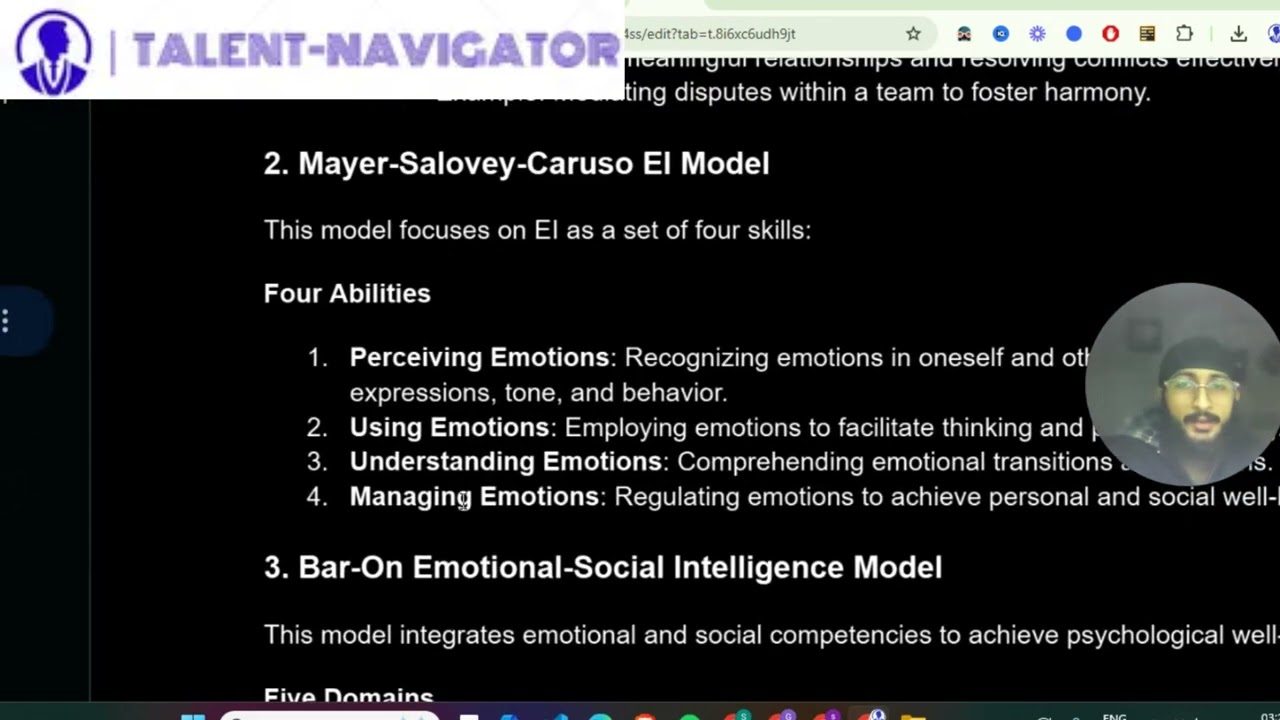
2. Mayer-Salovey-Caruso Model
This model emphasizes EI as a set of four skills:
- Perceiving Emotions: Recognizing emotions in oneself and others through cues like body language.
- Using Emotions: Applying emotions to facilitate thinking and decision-making.
- Understanding Emotions: Comprehending emotional transitions and their meanings.
- Managing Emotions: Regulating emotions to achieve well-being.
3. Baron’s Emotional-Social Intelligence Model
This model integrates emotional and social competencies, which are divided into five domains:
- Intrapersonal Skills: Self-awareness and self-expression.
- Interpersonal Skills: Empathy and support for others.
- Adaptability: Flexibility in dynamic settings.
- Stress Management: Tolerance and impulse control.
- General Mood: Fostering optimism and overall life satisfaction.
4. Six Seconds Model
This practical approach provides actionable steps to enhance EI, summarized in three reflective questions:
- How am I feeling? - Fostering self-awareness.
- What options do I have? - Deliberate decision-making.
- What is truly important to me? - Purpose-driven action.
5. Plutchik’s Wheel of Emotions
This model visually represents emotions and how primary feelings blend to create complex emotional states, aiding in understanding and adapting emotional responses for personal growth.
Emotional Intelligence in Leadership
Leadership transcends mere technical skills; it fundamentally involves managing and inspiring people. Emotional intelligence empowers leaders to:
- Build Trust: By demonstrating empathy and understanding, leaders foster credibility.
- Motivate Teams: High EI leaders connect with team members personally, driving motivation.
- Resolve Conflicts: Effective emotional regulation aids in mediating disputes.
- Adapt to Change: Leaders with high EI navigate uncertainty without losing composure.
Real-Life Applications of Emotional Intelligence
Emotionally intelligent leaders are invaluable in scenarios such as:
- Team Motivation: Energizing teams through emotional connections.
- Crisis Management: Remaining calm and making informed decisions under pressure.
- Feedback Delivery: Providing constructive criticism to support growth without demoralization.
Developing Emotional Intelligence
The good news is that emotional intelligence can be developed through intentional practices. Here are practical exercises to enhance your EI:
- Mindfulness Practices: Engage in meditation to increase self-awareness and focus.
- Journaling: Reflect on emotional triggers and personal responses.
- Active Listening: Pay close attention to others’ emotions during conversations.
- Seeking Feedback: Request constructive criticism to identify blind spots and areas for improvement.
- Stress Management: Implement techniques like deep breathing and regular exercise.
- Track Progress: Set specific EI-related goals and maintain a journal to document emotional responses, celebrating your success along the way.
Emotional Intelligence in Everyday Life
Emotional intelligence is not merely a skill for leaders; it enriches our daily interactions with family, friends, and colleagues. Understanding and applying EI can lead to healthier, more fulfilling relationships and a more harmonious workplace.
Conclusion
Mastering emotional intelligence is an ongoing journey of self-improvement and growth. By understanding EI's theoretical foundations and applying practical strategies, we can unlock our full potential as effective leaders, collaborators, and compassionate individuals. It’s time to embrace emotional intelligence for a brighter future in both our personal and professional lives.
Take a step today towards enhancing your emotional intelligence; reflect on your emotions, practice empathy, and connect with those around you!


Comments
Post a Comment