Unlocking the Brain: The Role of Attention in Visual Processing
By Talent Navigator
Published Mar 2, 2025
4 min read
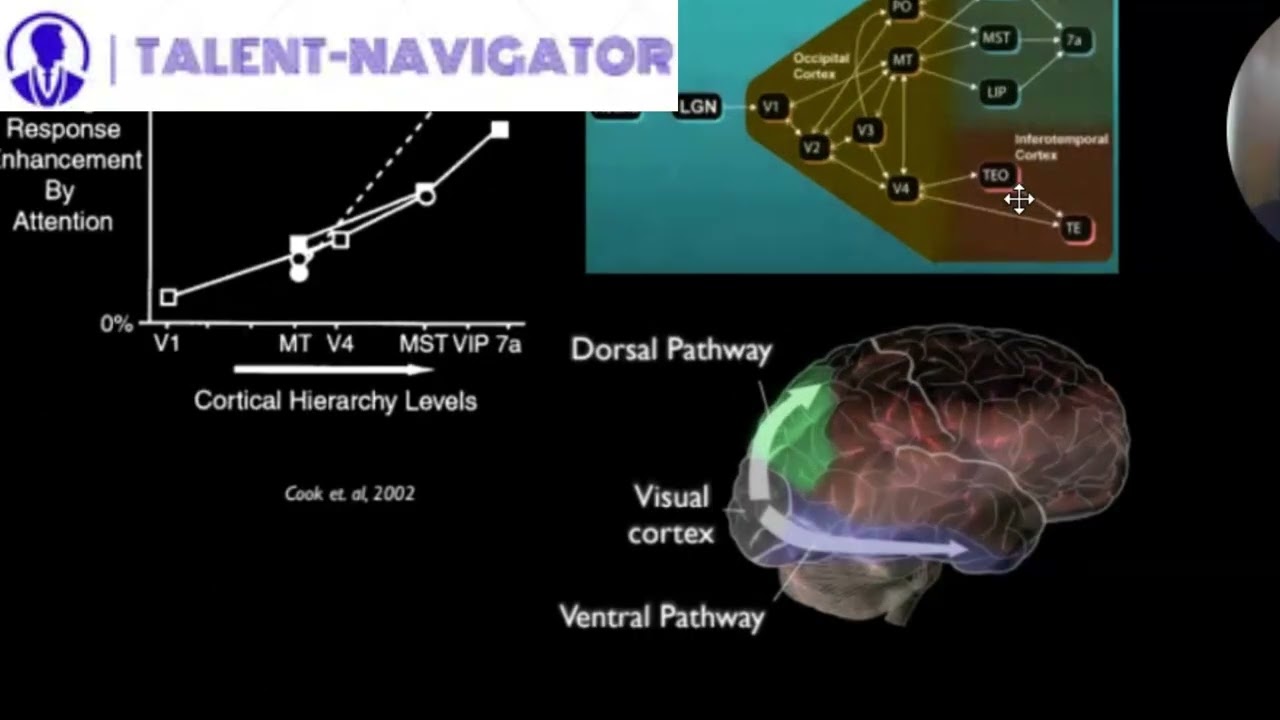
The brain's ability to process visual information is a fascinating area of neuroscience that has garnered significant attention in recent years. Understanding how attention influences visual processing reveals how we interact with our environment and underscores the complexity of our cognitive functions. This article delves into the intricacies of attention in visual processing, examining how it modulates neural responses, amplifies relevant information, and ultimately enhances our perception.
What is Attention in Visual Processing?
Attention is the cognitive process of selectively focusing on certain stimuli while ignoring others. This process is crucial in our daily experiences as it allows us to allocate mental resources to the most relevant information. In visual processing, attention modulates the response of neurons within the visual cortex, influencing how we perceive visual stimuli.
The Role of the Visual Cortex
The visual cortex is divided into several areas, each specialized for different aspects of visual perception. Two key pathways in the visual system are the dorsal and ventral pathways:
- Dorsal Pathway: Often referred to as the "where" pathway, it processes spatial awareness and motion.
- Ventral Pathway: Known as the "what" pathway, it is responsible for object recognition and the processing of visual details.
Understanding how attention interacts with these pathways is crucial. Research indicates that attention amplifies neural responses, enhancing the signal-to-noise ratio in sensory processing, allowing us to better discern relevant information from background noise.
Neural Response Modulation
How Attention Affects Neuron Activity
Research has shown that attention can significantly alter the firing rates of neurons in different areas of the visual cortex. This modulation can be observed through graphical representations of sensory-driven versus attention-driven activity. Here are a few key insights revealed through studies:
- Increased Firing Rates: When attention is directed toward specific visual elements, there is a noticeable increase in neuronal firing rates, indicating a heightened state of awareness and processing.
- Spatial Attention: Attention enhances focus on relevant spatial locations, improving our ability to detect changes or movements within our visual field.
Graphical Analysis of Attention Effects
Graphs depicting attentional enhancement across the cortical hierarchy provide a compelling visual representation of how attention modulates neuron responses.
- The x-axis typically represents various levels in the visual cortical hierarchy, while the y-axis illustrates average response enhancement due to attention.
- As one moves up the cortical hierarchy, from lower visual areas (like V1) to higher processing regions, the effect of attentional modulation becomes more apparent, reflecting a consistent trend of increased enhancement.
Experimental Insights
One of the pivotal studies in this area, conducted by researchers Gandhi and Bo in 1999, investigated the effects of spatial attention on human primary visual cortex (V1). In their experiment:
- Participants were tasked with detecting changes in stimulus speed while focusing on specific visual locations.
- Reaction Time (RT) was measured to gauge attentional modulation effects.
Key Findings
- Faster Reaction Times: Stronger attention correlated with quicker detection of speed changes, underscoring the role of attentional modulation in enhancing visual processing efficiency.
- Increased Accuracy: Participants demonstrated greater accuracy in response, further highlighting the importance of attention in visual tasks.
These findings affirm the role of the primary visual cortex as a critical player in attention-driven visual processing, where selective prioritization is crucial for interpreting the world around us.
Conclusion: The Significance of Attention in Visual Processing
Understanding the mechanisms behind attention and its impact on visual processing opens doors to various applications, from improving educational strategies to enhancing user interfaces in technology. The interplay between attention and neural activity in the visual cortex is a profound area of study that continues to evolve.
Through ongoing research, we can further uncover the complexities of attention and perception, enriching our knowledge in fields like neuroscience, psychology, and artificial intelligence.
Don't miss out on the latest findings in neuroscience! For more insights on enhancing customer support with AI, check out how innovative AI solutions are reshaping our understanding of visual and perceptual tasks.


Comments
Post a Comment