Understanding Attentional Blink: Insights from a 30-Day Experiment
By Talent Navigator
Published Apr 26, 2025
4 min read
In today’s fast-paced world, our ability to focus our attention has become paramount. But what happens when we try to juggle multiple tasks? The concept of attentional blink sheds light on our brain’s limitations in processing information. Through a unique 30-day experiment exploring attentional blink, valuable lessons on cognitive processing, attention dynamics, and memory consolidation emerge. This article unpacks the significance of attentional blink, its experimental foundation, and its implications for everyday life.
What is Attentional Blink?
Attentional blink refers to a phenomenon where the brain becomes temporarily unable to process additional visual information after identifying a target stimulus. This effect usually lasts between 200 to 500 milliseconds. In this state, if a second target appears during this short window, it may not be perceived or encoded, even though it reaches our sensory levels.
The Science Behind Attentional Blink
- Cognitive Load: When our attention is fixed on one task (the first target), our cognitive resources are temporarily tied up. The brain prioritizes consolidating this information, leaving little bandwidth for additional stimuli.
- Dual-task Conditions: Research shows that attentional blink is more evident in dual-task scenarios, where participants are required to detect multiple targets. The performance drops significantly when both targets are presented in quick succession.
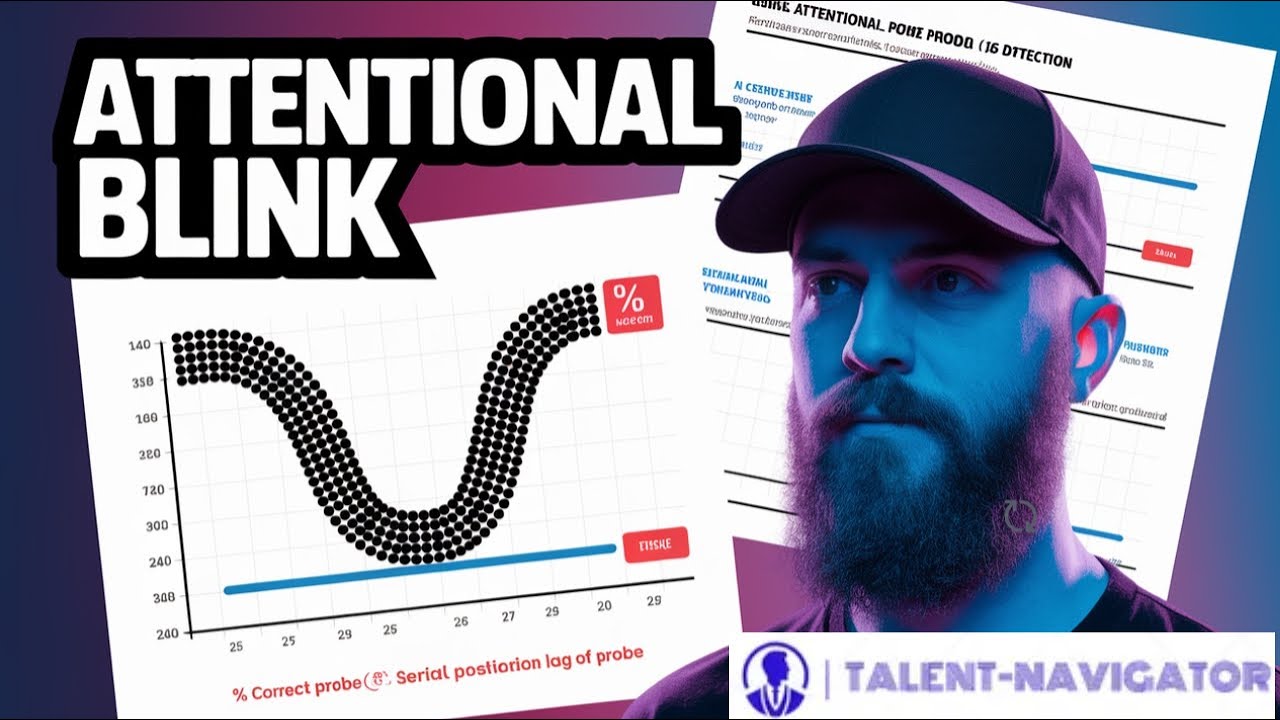
- Empirical Evidence: Studies have depicted a U-shaped drop in performance when participants are tasked with detecting probes in a dual-task setup. The accuracy for probe detection declines before stabilizing again, indicating a clear bottleneck in cognitive processing during the attentional blink.
The Experiment
During the 30-day experiment, various methods were employed to quantify and qualify the attentional blink effect:
Setup
- Single Task vs. Dual Task: Participants engaged in both single and dual-task experiments. In the single task, the goal was straightforward; detect a single target. In the dual task, participants had to identify both a target and a probe that appeared in rapid succession.
- Rapid Serial Visual Presentation (RSVP): Letters were presented quickly, a technique that could expose the fleeting nature of attention.
Findings
- High Performance in Single Tasks: In the control condition (single task), detection accuracy remained steady, about 95%. This indicates that under less cognitive load, our attention and memory processing operate at peak efficiency.
- Significant Drop in Dual Task Performance: In contrast, when participants were faced with dual tasks, performance significantly dropped between lags of 2 to 5. The attentional blink was vividly illustrated, demonstrating that the brain might miss subsequent stimuli when still processing the first.
Implications of Attentional Blink
Understanding attentional blink holds critical importance beyond experimental research. The implications are far-reaching:
Daily Life and Work Performance
- Task Overload: In our multitasking world, being aware of attentional blink can help manage workloads effectively. Understanding that trying to process too many items at once can lead to errors and missed information is crucial.
- Application in Learning: Educators can leverage knowledge of attentional blink to enhance teaching methods, ensuring information is spaced out appropriately for better retention.
Psychological Insights
- Memory and Perception: The experiment highlights that memory is not merely a perception issue but fundamentally tied to processing time. If there is not enough time for consolidation, critical information may never be stored effectively.
- Limitations of Temporal Attention: Attentional blink underscores the limitations inherent in how we distribute our attention over time, challenging the notion that attention can be maintained constantly.
Conclusion
After a thorough exploration of attentional blink through a 30-day experiment, it becomes evident that our cognitive processes are not as seamless as we often believe. Recognizing the significance of timing between stimuli can create a roadmap for enhancing focus and memory retention in various aspects of life. By managing attentional demands, recognizing cognitive limitations, and adapting strategies to optimize performance, we can move toward better control of our attention.
Feeling overwhelmed by the demands of multitasking? It’s time to take a step back and re-evaluate how you handle your attention. Understanding the powerful effects of attentional blink can lead to more effective strategies for managing focus and achieving clarity in both personal and professional settings.


Comments
Post a Comment