Unlocking the Secrets of Attention and Memory: Insights from a 30-Day Challenge
By Talent Navigator
Published Apr 28, 2025
4 min read
The Importance of Attention in Memory Formation
Attention is not just a cognitive skill; it plays a fundamental role in encoding, storing, and retrieving memories. When we focus our attention on specific stimuli, we're able to effectively store information in our short-term and long-term memory. This relationship between attention and memory can be illustrated through several key concepts:
- Sensory Encoding: The process where sensory inputs are transformed into a format that can be stored in the brain.
- Short-term Consolidation: Moving information from immediate perception into short-term memory for near-future use.
- Long-term Storage: The ability to keep information accessible over extended periods, enabling its retrieval when necessary.
Failing to manage attention adequately can lead to significant gaps in memory retention, often making retrieval of essential information challenging.
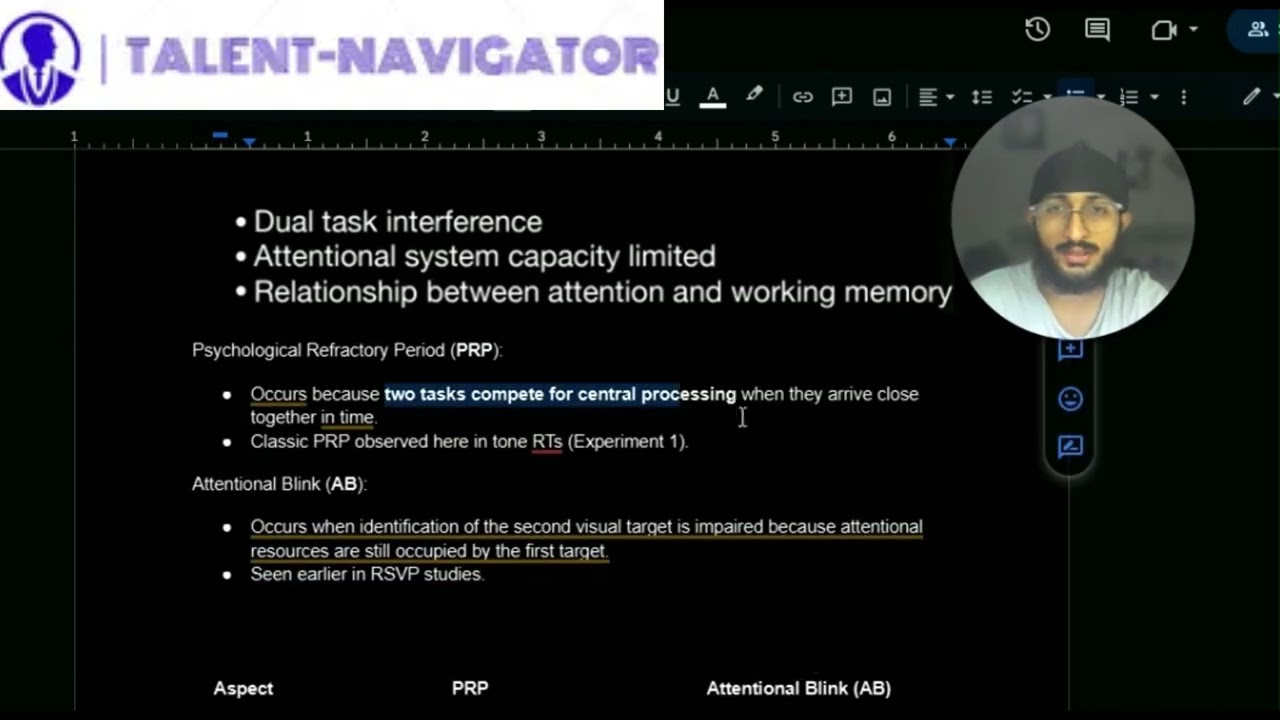
What is Attentional Blink?
Attentional blink refers to a short period after focusing on one stimulus when a second target goes unnoticed. This has significant implications in environments demanding high concentration, as it affects not just memory but also performance across various tasks, such as learning and decision-making.
Experiment Insights
Through experiments designed to test attention effects, participants demonstrated varying degrees of accuracy when identifying letters displayed in rapid succession. Notably, attention shifted only after the prior target was processed, resulting in a lower recognition rate of subsequent stimuli.
Key findings included:
- Increased Focus: Participants who more effectively engaged their attention could better recall targeted information.
- Processing Load Reduction: By honing attention skills, individuals reported less mental effort, thereby improving performance over time.
Practical Implications of Attention Management
The insights from these experiences highlight the significance of practicing and refining attention to enhance memory and performance. Here are several strategies to improve attention management:
- Eliminate Distractions: Create a working environment free of interruptions to enhance focus.
- Mindfulness and Meditation: Practicing mindfulness can improve your ability to control attention and avoid distraction.
- Scheduled Breaks: Regular breaks during tasks can help maintain optimal cognitive performance and prevent attentional fatigue.
- Chunking Information: Breaking down complex information into smaller, manageable parts can aid memory retention.
- Regular Practice: Engage consistently in activities that require focus, enhancing your ability to direct attention when needed.
Mistakes to Avoid in Attention Management
While learning to manage attention effectively, several common pitfalls can hinder progress:
- Overloading Your Brain: Trying to process too much information at once can lead to mental blockage and decreased efficiency.
- Neglecting Rest: Insufficient sleep or breaks can impair cognitive functions, particularly attention.
- Ignoring Feedback: Not adjusting your attention strategies based on past performance can result in repeated mistakes.
- Inconsistent Practice: Without continual effort, skills deteriorate, leading to a regression in attention management abilities.
The Role of Practice in Enhancing Attention
As demonstrated by varied experiences, the more you practice focusing your attention, the more automatic the process becomes. Tasks requiring attention often feel labor-intensive at first but gradually transform into instinctive actions. For example, typing initially requires significant mental effort, but with practice, it becomes automatic. This shift is due to the brain's ability to encode and recall instances from our experiences faster and with less effort over time.
Real-life Applications
- Sports: Athletes rely heavily on sharp focus and the ability to swiftly shift their attention during competitions.
- Academics: Students can benefit from improved attention through tactics that strengthen their encoding and retrieval skills, ensuring better academic performance.
- Music and Arts: High levels of attention are essential for mastering complex skills, allowing performers to hone their abilities more effectively.
Conclusion
Improving our understanding of attention not only enhances memory retention but also enriches our overall performance across various disciplines. By engaging in practices that promote effective attention management and avoiding common mistakes, individuals can cultivate better focus, leading to significant advancements in personal and professional realms.
To put these principles into action, consider keeping a journal of your attention practices and monitoring any improvements in memory and performance. The journey of understanding and enhancing your attention is ongoing—embrace the challenge and explore its benefits!


Comments
Post a Comment