Understanding the Brain: Key Lobes and Their Functions for Psychology Enthusiasts
By Talent Navigator
Published Jan 4, 2025
4 min read
The human brain is a complex organ that plays a crucial role in shaping our thoughts, behaviors, and emotions. Understanding how different parts of the brain function is essential for anyone interested in psychology or neuroscience. In this article, we will explore the five key lobes of the brain, their functions, and insights from psychological theories, especially for psychology enthusiasts.
The Five Key Lobes of the Brain
Each lobe of the brain has unique functions and plays a vital role in our overall behavior and cognitive abilities. Below is a breakdown of the four primary lobes of the brain, which are distinguishable by color in diagrams of the brain:
1. Frontal Lobe
The frontal lobe is located at the front of the brain and is responsible for numerous higher cognitive functions, including:
- Behavior and personality
- Decision making
- Planning and executing goals
- Interpersonal skills and communication
- Self-evaluation and self-esteem
- Imagination and idea formation
This lobe plays a critical role in our ability to interact socially and make complex decisions, emphasizing its importance in psychological studies.
2. Parietal Lobe
The parietal lobe, generally represented in pink, is located at the top of the brain. Its functions include:
- Sensation and touch
- Motor skills
- Body movement coordination
- Differentiating between left and right
This lobe helps us process sensory information and coordinates our movements, which are essential for daily activities.
3. Occipital Lobe
The occipital lobe is at the back of the brain, typically depicted in violet. Its primary functions involve:
- Visual processing
- Identification of colors
- Language, words, and speech formation
- Visual memory
Understanding how this lobe functions can provide insights into visual perception and its impact on learning and communication.
4. Temporal Lobe
Situated on the sides of the brain, the temporal lobe is crucial for:
- Memory (short-term and long-term)
- Smell and taste perception
- Faces recognition
- Language comprehension and empathy
This lobe is essential for processing auditory information and is involved in forming memories, which is a key area of study in psychology, especially concerning human behavior and emotional responses.
The DISC Profile Theory
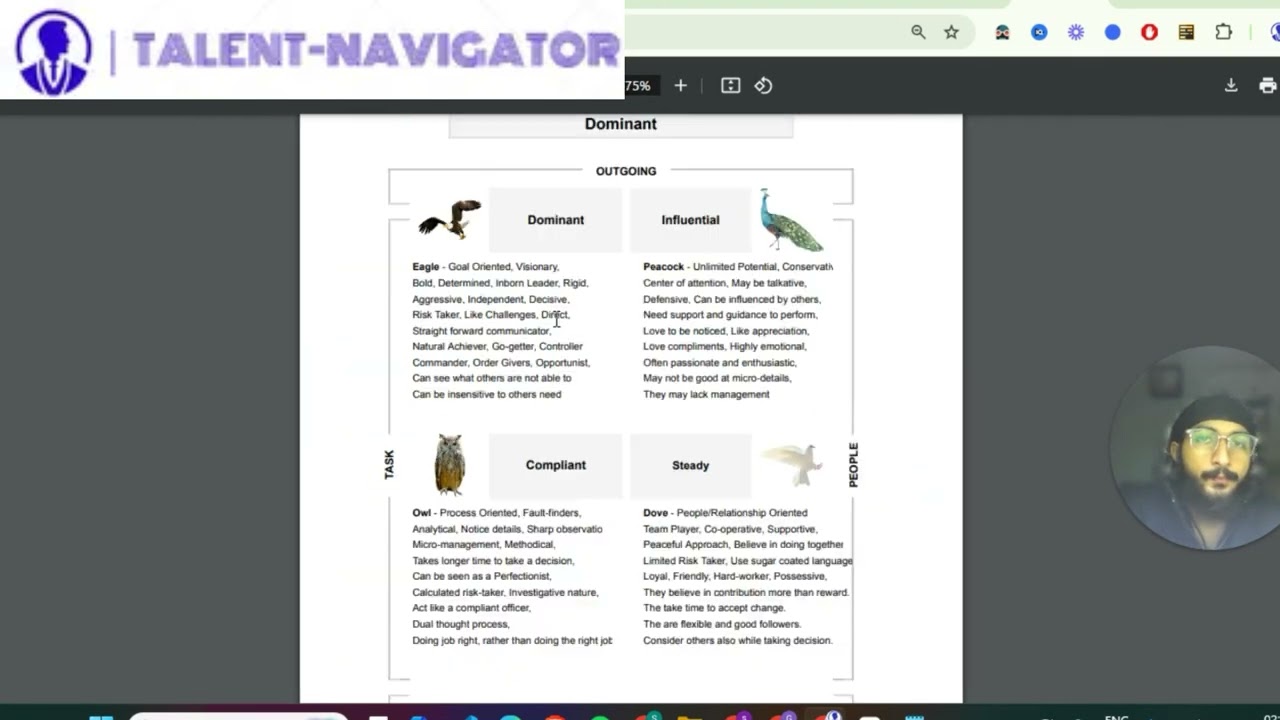
Beyond understanding the brain's physical structure, comprehensive theories like the DISC profile can enhance our grasp of human personalities and behaviors. Developed by Dr. William Marston in 1948, the DISC model categorizes personalities into four distinct types, represented by animals. Each type correlates with specific behaviors and traits:
- D (Dominant): Symbolized by the Eagle, focused on results, assertiveness, and challenge.
- I (Influential): Represented by the Peacock, values relationships, and interpersonal connections.
- S (Steady): Evoked by the Dog, emphasizes consistency, collaboration, and support.
- C (Compliant): Represented by the Owl, focused on structure, analytical thinking, and precision.
The DISC profile has been beneficial across various fields such as HR, sales, and management, allowing professionals to tailor their approaches based on personality types.
Intelligence Types: Intrapersonal vs. Interpersonal
In addition to DISC, understanding intelligence types can further enhance our knowledge of human behavior:
- Intrapersonal Intelligence deals with self-awareness, goal setting, and emotional management.
- High focus on personal reflection and self-evaluation.
- Interpersonal Intelligence involves understanding and connecting with others.
- Important for teamwork, social interactions, and effective communication.
Recognizing where a person lies on this spectrum can aid in personal and professional relationships, highlighting strengths and areas for growth.
Key Aspects of Cognitive Functioning
Understanding cognitive functioning also involves examining different types of intelligence:
- Logical Intelligence: Focused on reasoning, deductive logic, and systematic problem-solving.
- Imaginative Intelligence: Encourages creativity, visual thinking, and out-of-the-box ideas.
- Musical Intelligence: Pertains to understanding rhythms, tones, and sound patterns.
- Kinesthetic Intelligence: Involves physical movement and coordination, essential for activities requiring fine motor skills.
Each type of intelligence plays a crucial role in personal development and interpersonal interactions, highlighting the need for a balanced approach to cognitive training in psychology.
Conclusion
In conclusion, understanding the key lobes of the brain and their functions provides invaluable insights into human behavior and psychology. The integration of theories such as the DISC profile further enhances our grasp of personality dynamics and interpersonal relationships. Whether you are a psychology enthusiast or a professional in the field, delving into these concepts not only enriches knowledge but also fosters personal growth and empathy toward others.
Dive deeper into the fascinating world of psychology and embrace what these insights mean for your personal and professional relationships. Explore further, learn, and apply your knowledge to become a better version of yourself!


Comments
Post a Comment